
September 2026 Investigation
Camp Recovery: A Place That Should Not Be Forgotten
Not every investigation yields evidence that a place is haunted. But every location does have a story to tell—a story that deserves to be remembered. Camp Recovery is just such a place. Its current condition is unkempt at best, but that doesn’t make its history any less important. Hidden along the rural roads of what is now southern Decatur County, Georgia, is a site where, more than two centuries ago, sick American soldiers were sent with the hope that they might recover. For some of them, Camp Recovery instead became their final resting place.
The story of Camp Recovery is closely connected to Fort Scott, an important United States Army post established along the Flint River near the Georgia–Florida frontier. Fort Scott played a significant role during the First Seminole War of 1817–1818 and remained active during the unsettled years that followed. Soldiers stationed there faced dangers beyond armed conflict. Disease was a constant and often more deadly enemy.
The low, swampy country surrounding the fort created ideal conditions for mosquito-borne illness, although the connection between mosquitoes and malaria would not be understood for decades. Fevers, dysentery, diarrhea, and other illnesses repeatedly affected the garrison. By 1820, sickness had become a serious problem among the soldiers stationed at Fort Scott.
Among the Army physicians attempting to care for the sick was Dr. Thomas Lawson, surgeon of the 7th U.S. Infantry. Lawson would later serve as Surgeon General of the United States Army. Like other physicians of his time, he believed that the unhealthy conditions and air surrounding the river swamps contributed to the illnesses affecting the men. Moving the sick to higher, drier ground seemed to offer them a better chance of recovery.
A temporary medical encampment was therefore established on a high pine ridge approximately three miles from Fort Scott. The historical marker at the site gives September 15, 1820, as the date Camp Recovery was established.
On September 18, approximately 70 sick soldiers who were considered strong enough to endure the journey were moved from Fort Scott to the new camp under the supervision of an assistant surgeon. The location and its cleaner surroundings offered hope that the men might regain their health.
The place became known by an optimistic name: Camp Recovery.
Almost immediately, however, conditions worked against them.
Soon after the soldiers arrived, heavy rain began to fall. For five or six days, the camp was subjected to wet weather. The men had already been weakened by illness, and the conditions did little to improve their health. Intermittent fevers, dysentery, diarrhea, and other illnesses continued to affect the patients.
For a time, conditions improved. The weather became milder, and some of the soldiers appeared to benefit from the change. Then, on October 22, a sudden period of cold weather struck the encampment. Men who had been improving suffered relapses, while additional illnesses developed among the patients. Lawson later described this period as the most fatal stage of the camp’s short existence.
The experiment continued for another month, but ultimately Camp Recovery failed to provide the improvement its founders had hoped for.
On November 23, 1820, little more than two months after the first patients arrived, Camp Recovery was abandoned. The surviving sick were returned to Fort Scott.
A number of soldiers had died during the camp’s brief existence and were buried nearby.
Exactly how many men died at Camp Recovery remains uncertain. No known separate death roll survives specifically identifying all of the soldiers who died there, and the deaths appear to have been recorded as part of the broader Fort Scott garrison. Because of this, later estimates of the number buried at Camp Recovery vary and should be treated cautiously.
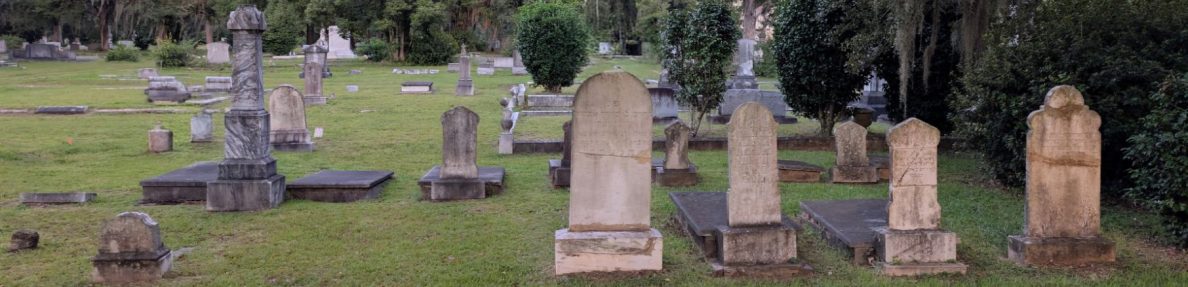
What is certain is that soldiers were buried on the ridge and that their graves remained there long after the temporary hospital encampment disappeared.
As the decades passed, Camp Recovery gradually faded from view. Any temporary structures or tents associated with the camp vanished, and the original markers identifying individual graves deteriorated or disappeared. Yet local knowledge of the military cemetery survived.
More than sixty years later, concern about the forgotten graves finally reached the federal government.
In 1882, Georgia Congressman Henry G. Turner forwarded a letter from Decatur County resident Maston O’Neal to the Secretary of War calling attention to the military graves at Camp Recovery. The Army subsequently sent Lieutenant J. D. Hoskins to investigate the site.
Hoskins found graves scattered in and around a pine forest. Their original markers were gone, but depressions in the earth still revealed the locations of some of the burials. By that time, the individual graves could no longer be readily identified.
The investigation brought long-overdue official recognition to the site.
On October 13, 1882, the Secretary of War authorized monuments for Camp Recovery and the nearby military sites of Fort Scott and Fort Hughes. The monuments were erected the following year.
At Camp Recovery, an old artillery piece was mounted vertically in a stone base as a memorial to the soldiers buried nearby. Its inscription commemorates United States officers and soldiers who died during the military operations and Indian conflicts in the Flint and Chattahoochee River country between 1817 and 1821.
The monument still marks a place that otherwise gives few indications of what occurred there.
In later years, additional efforts were made to identify and preserve the significance of Camp Recovery. In 1971, property owner N. L. Sellars erected the distinctive entrance identifying the site. In 1995, the Historic Chattahoochee Commission and the Decatur County Historical Society placed a historical marker along the road explaining Camp Recovery’s history. An earlier WPA-era marker in Bainbridge also directed travelers toward the location.
These markers serve as reminders that generations before us recognized that this remote pine ridge mattered.
Nothing remains of what was once Camp Recovery. The tents and temporary encampment disappeared long ago.
What remains is quieter.
A patch of ground.
Unmarked graves.
A monument.
And more than two hundred years later, it is a story that deserves to be preserved and not forgotten.


